
If you’ve spent any time browsing natural beauty shelves or scrolling skincare accounts lately, you’ve seen it: a thick, glossy bottle labelled castor oil, usually promising thicker hair, softer skin, and a shortcut to a full beauty cabinet. It’s one of the oldest ingredients in the natural beauty world, and it’s having a very well-earned moment again.
At SOiL Organics, we sell a lot of castor oil, and we get a lot of the same questions. What does it actually do? Is it safe for my skin? How do I use it without making a mess? This guide answers all of that, so you can start using castor oil with confidence, not guesswork.
What Is Castor Oil, Exactly?
Castor oil is a vegetable oil cold-pressed from the seeds of the castor plant, Ricinus communis. It’s thick, pale yellow, and has a distinctive earthy scent. Ours is sourced from India, where the castor plant is widely cultivated, and cold-pressed to keep its nutrient profile intact.
What sets castor oil apart from most other carrier oils is its fatty acid makeup. Roughly 90% of its content is ricinoleic acid, an unusual fatty acid barely found anywhere else in nature. That single compound is responsible for most of what makes castor oil useful: it’s deeply moisturising, has natural anti-inflammatory and antimicrobial properties, and it’s a humectant, meaning it helps draw moisture into the skin rather than just sitting on top of it.
The Benefits for Skin
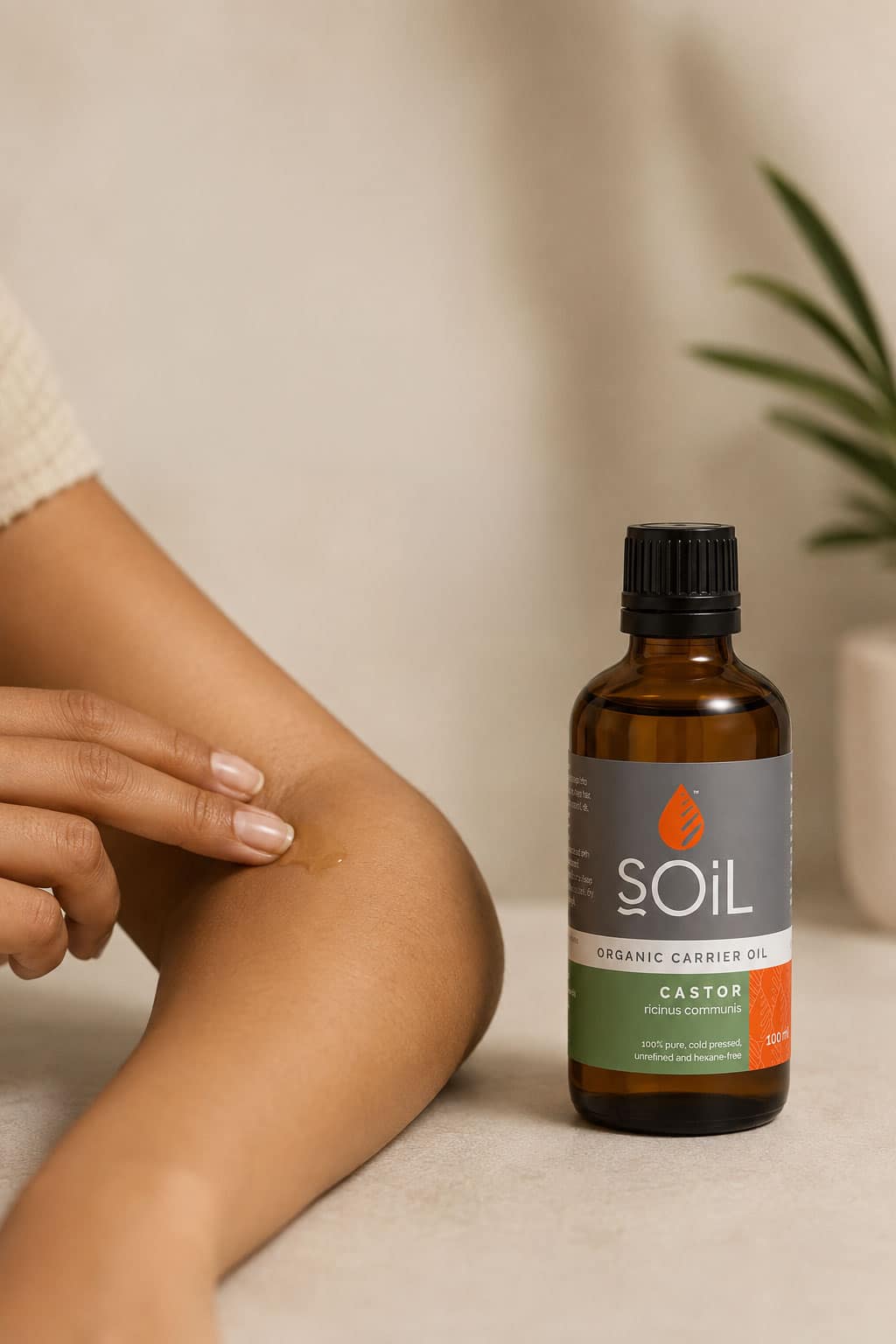
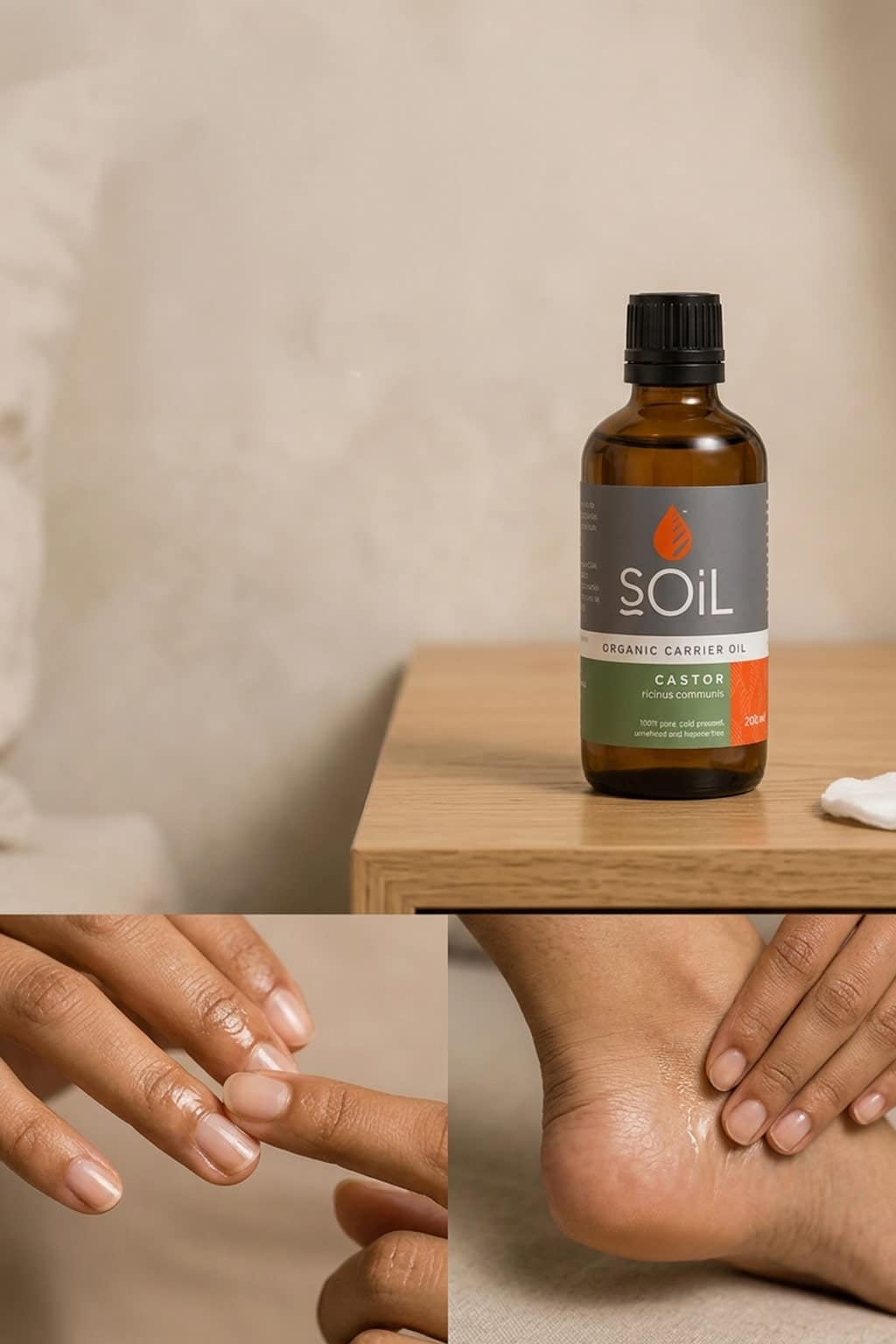
Deep, lasting hydration. Castor oil is thick and rich, which makes it excellent at locking moisture into dry patches, cracked heels, cuticles, and rough elbows. A little goes a long way.
Calming for irritated skin. Ricinoleic acid has recognised anti-inflammatory properties, which is why castor oil has traditionally been used on minor skin irritations, dry patches, and areas prone to redness. It’s gentle enough for sensitive skin when properly diluted.
Support for acne-prone skin. Castor oil has natural antimicrobial properties, and some people find it helpful as part of an acne-prone skincare routine when blended with a lighter oil. As with any oil, patch test first, since castor oil is comedogenic for some skin types.
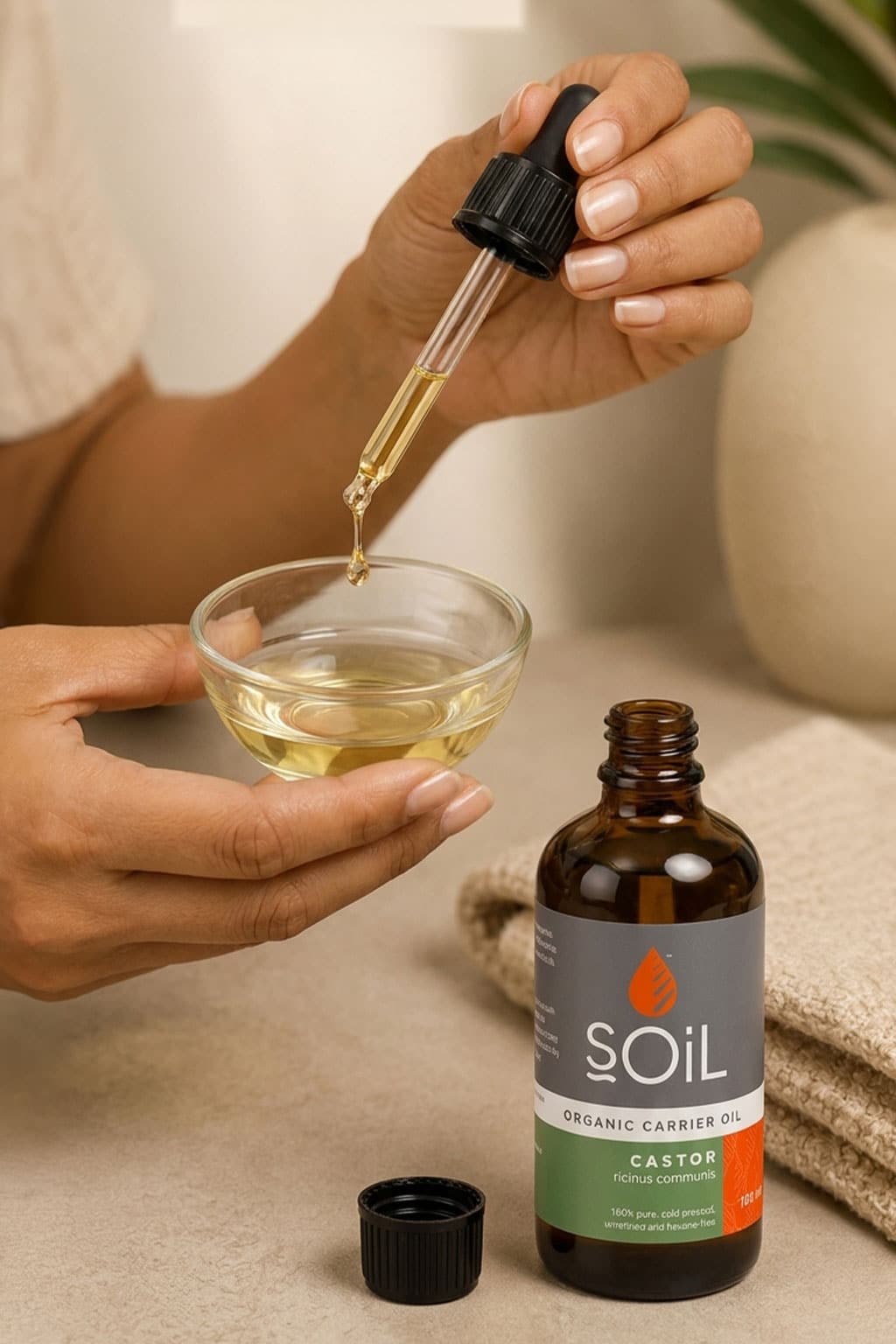
A natural addition to your moisturiser. Because it’s such a heavy oil, most people mix a few drops of castor oil into a lighter carrier oil like jojoba or a regular moisturiser rather than applying it neat all over the face.
The Benefits for Hair
Scalp conditioning. Massaged into the scalp, castor oil can help moisturise a dry, flaky scalp and leave hair feeling softer. Many people include it as a pre-wash scalp treatment.
Shine and frizz control. A small amount smoothed through the ends of the hair adds gloss and helps tame flyaways, particularly on dry or damaged hair.
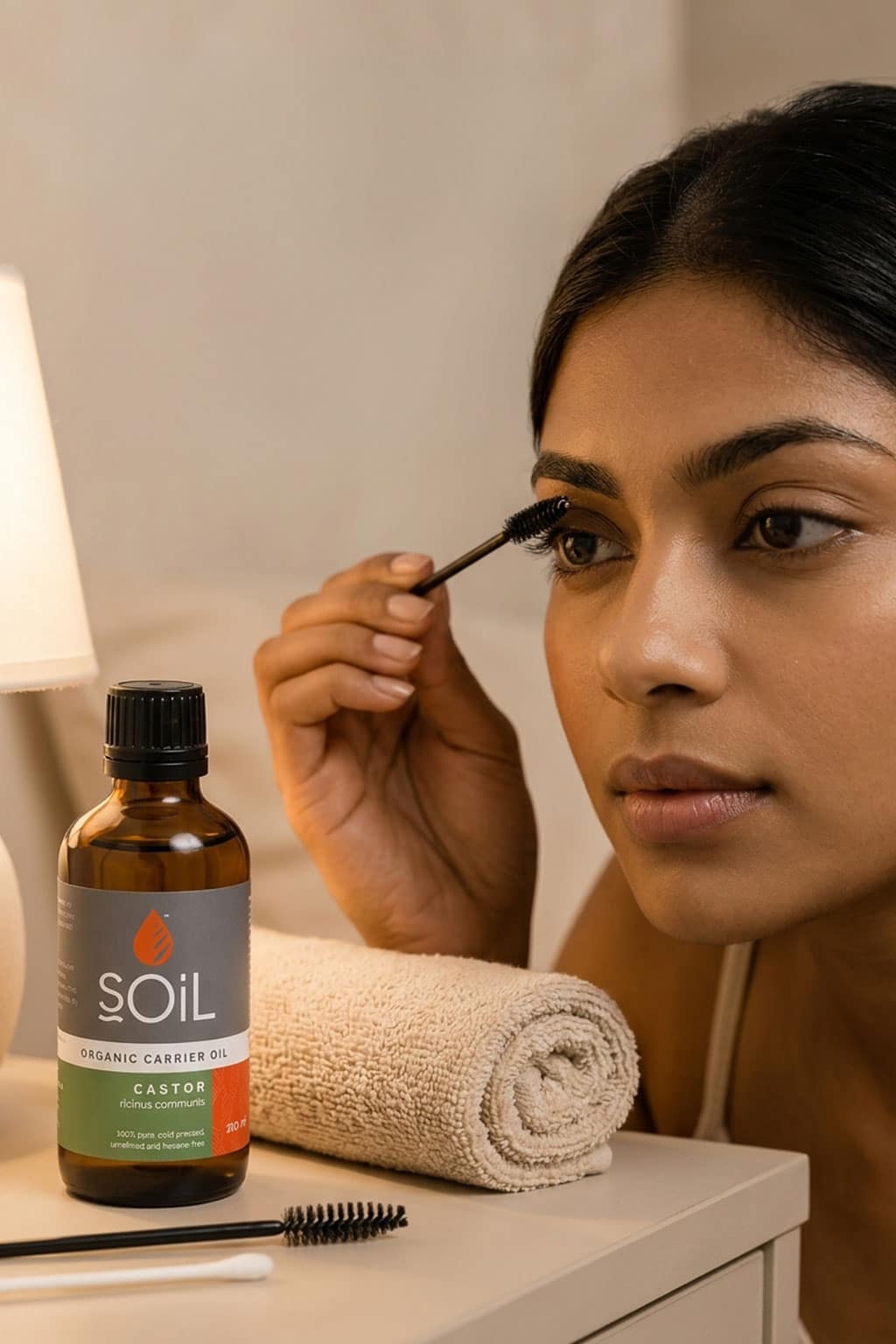
Lash and brow conditioning. This is one of castor oil’s most popular uses. Applied nightly along clean lashes and brows with a clean spoolie, it conditions the hairs and keeps them from becoming brittle.
A quick, honest note: you’ll see plenty of claims online that castor oil dramatically speeds up hair or lash growth. The science here is still limited. What’s well supported is that castor oil conditions hair and scalp, reduces breakage, and improves the health of the hair you already have, which does make hair look fuller and grow out healthier over time. Treat the dramatic “grew my lashes overnight” claims with a healthy dose of scepticism.
How to Use Castor Oil: Getting Started
- Patch test first. Apply a small amount to your inner forearm and wait 24 hours. Castor oil is generally well tolerated, but every skin is different.
- Dilute for the face. Mix a few drops into a lighter carrier oil (jojoba works particularly well since it’s close to your skin’s own sebum) before applying to your face.
- Scalp treatment. Warm a small amount between your palms, massage into the scalp, leave for 30 minutes to overnight, then shampoo out thoroughly. Castor oil is thick, so expect to wash twice.
- Lash and brow serum. Dip a clean spoolie or cotton bud, sweep along clean lashes and brows before bed, and avoid direct contact with the eye itself.
- Cuticle and heel care. Apply neat to cuticles, elbows, and heels, ideally at night, and let it absorb while you sleep.

What to Look for When Buying Castor Oil
Not all castor oil is created equal. When you’re buying, look for:
- Cold-pressed, not solvent-extracted. Cold-pressing preserves the ricinoleic acid content and avoids leaving chemical residues behind.
- Certified organic. This confirms the castor plant was grown without synthetic pesticides or fertilisers.
- Hexane-free. Cheaper oils are sometimes extracted using hexane, a petroleum solvent. Cold-pressed oils don’t need it.
- Clear labelling. You should be able to see the plant’s Latin name (Ricinus Communis), the country of origin, and how it was processed.
Our organic Castor Oil is cold-pressed from Ricinus Communis seeds, sourced from India, and bottled here for our customers in Ireland. It’s a thick, purifying oil best diluted with something lighter, like our Jojoba Oil, before it goes anywhere near your face.
Common Mistakes to Avoid
Applying it neat all over your face. Castor oil is thick and heavy. Used undiluted across the whole face, it can feel greasy and, for some skin types, contribute to congestion. Dilute it or use it as a targeted treatment instead.
Expecting overnight results. Whether you’re using it on lashes, scalp, or dry skin, castor oil works gradually. Give any new addition to your routine at least four to six weeks of consistent use before deciding whether it’s working for you.
Skipping the patch test. Castor oil is generally gentle, but “generally” isn’t “always.” A quick patch test costs you a day and saves you a possible reaction.
Buying the cheapest bottle without checking the label. As with most natural oils, quality varies a lot between brands. A cold-pressed, certified organic castor oil behaves differently on skin than a cheaply processed one, even though both say “castor oil” on the front.
Castor Oil vs Jamaican Black Castor Oil
You may also come across Jamaican Black Castor Oil, which is roasted before pressing, giving it a darker colour, smokier scent, and slightly different pH. Both are genuine castor oil with the same core ricinoleic acid content, so the choice mostly comes down to preference. Our Castor Oil is the traditional cold-pressed, unroasted version, which keeps the scent lighter and the oil closer to its natural state.
Frequently Asked Questions
Can I use castor oil every day?
Yes, for most people. Since it’s thick, many find once or twice a day is plenty, particularly for lashes, cuticles, and dry patches.
Is castor oil good for oily skin?
It can be, in small, diluted amounts, thanks to its antimicrobial properties. Start with a very small quantity and watch how your skin responds.
Does castor oil expire?
It has a reasonably long shelf life when stored in a cool, dark place, typically one to two years unopened. Once opened, use within about a year for best results.
Can I use castor oil on colour-treated hair?
Yes. It’s a natural oil with no bleaching or stripping effect, so it’s generally safe for coloured or chemically treated hair.
Ready to Start?
Castor oil earns its reputation the honest way: it’s a genuinely useful, multi-purpose oil for skin and hair, backed by a fatty acid profile that’s hard to find anywhere else in nature. Start small, dilute where needed, and give it a few weeks of consistent use before judging the results.
Shop our organic, cold-pressed Castor Oil, along with the rest of our certified organic carrier oil range, at soilorganics.ie, proudly based in Ireland.


